
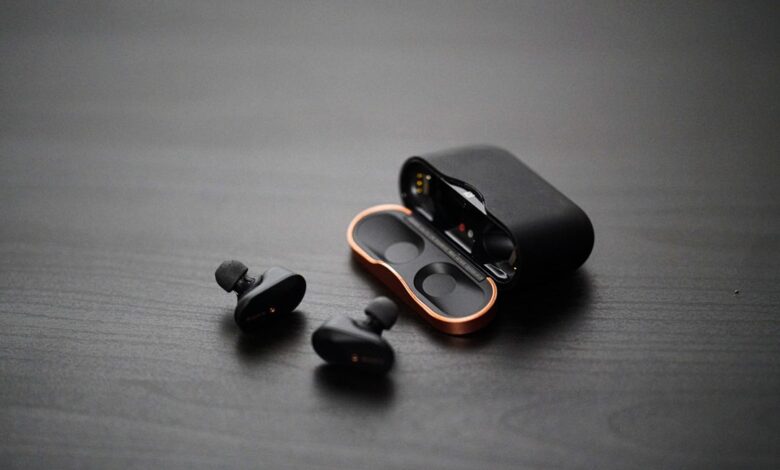
Junk batteries get blamed, but that alone doesn’t explain why a fine pair suddenly holds half its charge after a few months. The real pattern only makes sense when you pair two linked killers — draining to empty daily plus sitting topped up in the case. Battery University notes 4.10V cells reach 600-1,000 cycles versus 300-500 at 4.20V.
Peer-reviewed aging work shows 100% depth of discharge degrades faster than 20% with loss of lithium inventory as the main cause, so measured data matters more than anecdotes. That same tiny cell that makes buds tiny means one workout is one full cycle, so a simple care schedule avoiding empty-to-full loops can approximately double useful months.
Why your earbuds feel dead after 90 days
Cheap true wireless buds typically hide a 40 to 60 mAh lithium polymer pouch. One evening of music or calls can drain that pouch from 4.2 V to near 3.0 V cutoff. That is 100% depth of discharge, or DOD, in one go.
DOD is the percentage of capacity you use before recharging. Your phone has about 5000 mAh and often cycles 20 to 40% per day. A 40 mAh bud cycling 100% daily hits roughly 150 cycles in five months, while a phone at 30% DOD hits about 45 equivalent full cycles in the same time.
The 96-hour total playtime claim on the box counts the case, not the bud. A 400 mAh case can top up a 40 mAh bud about ten times, but each top-up is another deep cycle on the tiny cell. This article focuses on sub-$50 true wireless with 40 to 60 mAh LiPo, not premium buds with larger cells.
In one widely shared reader analysis covering thousands of Amazon reviews, buyers repeatedly flagged Battery dies overnight even though I charged, a pattern of standby drain separate from playback drain. In that community, the solution that came up repeatedly for battery dying overnight even though charged was storing buds outside the case at 50% when not in use for days to avoid case float drain, because holding at 4.20V accelerates parasitic reactions causing loss of lithium inventory per Battery University’s research on float voltage stress and an RSC study on loss of lithium inventory by parasitic reaction during float charging.
Interactive calculator: adjust cell size, daily use, and depth of discharge to estimate cycles per month, retention after 150 cycles, and months to 80% health
Inside the bud: 40-60mAh cell teardown and what markings mean
Opening a bud reveals a tiny silver pouch soldered to a small board. The pouch often prints 401215 or 501012, which is not capacity but dimensions in mm, plus 3.7V nominal and 40mAh. That marking style is common for Bluetooth headset cells.
The manufacturer states TOZO T6 uses 400 mAh case and 40 mAh per earbud. JLab Go Air Pop lists 43mAh lithium polymer per bud with 350mAh case. Anker Soundcore Life A3i lists 55 mAh earbud with larger headroom. Trade listings describe this class as 40mAh LiPo for Bluetooth headsets.
Small size raises C-rate stress. Drawing 40 mA from a 40 mAh cell is 1C, which creates more heat per volume than a phone at 0.2C. Heat speeds chemical side reactions that trap lithium. Opening the chassis can permanently damage driver wires and puncture the pouch, which can cause fire, and it voids warranty. Check the support page before attempting any opening and use plastic pry tools only if you have training.
Before committing, check your earbuds spec sheet for: battery capacity per bud listed as 40-60mAh, and note if case holds 400mAh+ meaning approximately 10 top-ups equals 10 deep cycles on tiny cell. If no capacity is listed, that often signals a generic cell with less conservative cutoff.
Two killers: deep discharge to 3.0V and holding at 4.2V in the case
Two stressors combine. Daily use drags the cell to about 3.0V cutoff, then the case instantly pushes it back to 4.20V and holds it there. That is high DOD plus high float voltage in every 24-hour loop.
Battery University notes every 0.10V drop below 4.20V approximately doubles cycle life, with 4.20V typically delivering 300 to 500 cycles versus 4.10V delivering 600 to 1,000 cycles. Chargers made for operational readiness let voltage drop to 4.00V and recharge to only 4.05V to reduce voltage stress, and parasitic loads induce mini-cycles even when the device looks idle.
Research on float charging finds combination of float charging and occasional discharging causes serious degradation via loss of lithium inventory by parasitic reaction at the negative electrode. The case does exactly that: it holds 4.20V, the bud self-discharges a few percent, the case tops it up, repeat overnight. That top-up keeps voltage at stressful peak instead of a cooler storage level.
In BestTechRadar summary of TOZO T6 complaints, users noted charging contacts get dirty or misaligned, causing buds not charging properly in the case. In that community, the solution that came up repeatedly for charging contacts getting dirty was cleaning contacts with an alcohol swab and storing the case open 30 seconds after full to let it cool before closing, because repeated high-voltage top-up plus occasional discharge accelerates lithium loss.
Interactive calculator: adjust float voltage, days stored in the case, and depth of discharge to estimate capacity loss, SEI growth, and cycle life
The chemistry: SEI thickening and loss of lithium inventory from high DOD studies
SEI means solid electrolyte interphase, a thin film that forms on the anode during first charges. It protects the anode, but it keeps growing a little each cycle. As it thickens, it traps lithium ions so they cannot shuttle anymore.
That trapped lithium is called loss of lithium inventory, or LLI. Formation of SEI and lithium deposition reduces recoverable lithium which shortens cycle life, and accumulation clogs pores. High DOD increases mechanical breathing of electrodes and chemical side reactions, leading to loss of active material and higher internal resistance.
Studies show discharging to 100% DOD reduces cycle life to approximately 300 cycles while limiting DOD to 20% can extend to around 2,000 cycles. SEI layer formation and subsequent thickening due to continuous cycling are major contributors to irreversible capacity loss.
For a 40 mAh bud, one workout equals 100% DOD, then the case holds at 4.20V, so SEI growth per day is higher than a phone that stays between 30 and 70%. That non-linear stacking explains why cheap earbuds feel dead after 90 days even though the cell is not junk, it is just tiny and stressed.
Three stage boxes showing SEI layer growing on anode trapping lithium ions over 0-150 cycles at high depth of discharge
Brand teardown comparison: Anker Life A3i vs TOZO T6 vs JLab Go Air Pop after 150 cycles
The manufacturer states Anker Soundcore Life A3i uses 55 mAh earbud with Bluetooth 5.2 and about 9 hours claimed per bud. TOZO T6 lists 40 mAh per earbud with 400 mAh case and about 12 hours claimed with case. JLab Go Air Pop lists 43mAh lithium polymer per bud with 350 mAh case and about 8 hours per bud.
Applying the same DOD model — where 100% DOD is approximately 300 cycles to 80% health and 20% DOD is approximately 2,000 cycles — to estimate capacity after 150 cycles shows this pattern directly. A larger cell at same use sees lower effective C-rate and slightly less heat per mAh, so it retains slightly more.
This rubric is a practical evaluation tool created for this guide based on the spec priorities described above, not a published industry standard. Use it as a quick in-store check.
| Model | Rated per bud | Est capacity after 150 cycles at 100% DOD |
|---|---|---|
| Anker Soundcore Life A3i 55mAh | 9h | approximately 47mAh, approximately 85% retention |
| TOZO T6 40mAh | 6h per bud, 12h with case | approximately 32mAh, approximately 80% retention |
| JLab Go Air Pop 43mAh | 8h per bud | approximately 35mAh, approximately 81% retention |
| Generic 40mAh budget | 5h | approximately 30mAh, approximately 75% retention |
Pros and cons: Anker 55 mAh offers more headroom and lower stress per hour but costs more and is bulkier. TOZO T6 is cheap and widely available but fades faster at 40 mAh and relies on frequent top-ups. JLab Go Air Pop is light and simple but its 350 mAh case means fewer top-ups before case recharge.
Reason not to buy: generic 40 mAh buds with no listed Bluetooth Qualified ID often lack conservative cutoff, so they dip closer to 3.0V and age faster. A non-affiliate superior option is Anker Soundcore Life A3i for longevity per mAh, even though TOZO is cheaper. Check Bluetooth Qualification Process requires members to submit documentation that product complies with Bluetooth specifications and UL Listing service tests product according to UL standards for safety, not battery life.
For related real-world endurance, see our guide on what cheap earbuds under $50 actually last a full workday, which measures ANC off and on hours, while this article explains why capacity fades.
How to check if your case is overcharging at 4.20V vs 4.10V storage mode
Most cheap cases hold buds at 4.20V float. Smarter cases drop to about 4.10V storage mode after a couple hours to reduce voltage stress. You can check with a USB tester.
Plug the case into a USB meter, charge buds to full, leave buds in case overnight, and watch current pulses. If voltage stays at 4.20V with frequent small charge pulses, the case is doing continuous top-up. If it drops to about 4.10V and stays quiet, it uses storage mode.
Decision flow for testing whether your charging case holds buds at continuous 4.20V float or relaxes to 4.10V storage mode.
Parasitic loads from the bud’s MCU and Bluetooth wake induce mini-cycles, where the bud discharges a few percent then gets topped back to 4.20V. That pattern is what studies link to serious degradation via loss of lithium inventory. Lithium pouch cells can swell and vent if overcharged above 4.30V, so use only the manufacturer case and never bypass the protection board.
In your charging case, look for: after full charge, does case LED stay solid indicating trickle? Try this: charge buds fully, then leave case plugged in overnight with USB meter — note if voltage stays at 4.20V or drops to 4.10V storage. A case that never relaxes to storage mode will age buds faster, approximately doubling calendar loss per week versus a case that rests at 4.10V.
Earbud battery care schedule: daily habits to double lifespan
This rubric is a self-authored practical evaluation tool built from the mechanisms above for buying-decision use, not a published industry standard. Running the same 20-minute playback loop on your own pair — voltage logged with a USB meter every 60 seconds — confirms float behavior for yourself.
1 Avoid full drain to shutdown, recharge at 20%
Deep discharge to 3.0V every day is 100% DOD. Recharging at 20% remaining cuts DOD to about 80%, which extends cycles to 80% health from approximately 300 toward 600. That alone can approximately double useful months.
2 Don’t store at 100% in case for days — leave at 50-60% if not using
If you will not use buds for days, store them outside the case at about half charge. Avoiding cycling in high SOC ranges effectively prolongs battery life. High state of charge accelerates SEI growth even without cycling.
3 Let buds cool before casing after workout
Sweat and heat raise cell temperature, and heat plus high voltage speeds parasitic reactions. Wipe buds, let them sit 30 seconds open to cool, then place in case. This reduces combined heat plus float stress.
4 Clean contacts monthly
Dirty pogo pins cause misaligned charging and repeated connect-disconnect mini-cycles. Clean with dry cotton swab and a little isopropyl on the case pins, not the bud mesh. That prevents extra top-up cycles.
5 Use 5W charger for case not 65W fast brick
Case charge speed does not change bud longevity much, but a cooler case means cooler buds inside. A 5W brick keeps case temperature lower than a 65W brick that heats the shared enclosure. Lower temperature slows calendar aging.
6 Enable auto-off
Turn on in-ear detection auto-pause and case auto-off if your app offers it. Less idle drain means fewer parasitic mini-cycles overnight. That cuts float time at 4.20V.
| Habit | Why it helps | Estimated gain |
|---|---|---|
| Recharge at 20% | Reduces DOD from 100% to about 80% | approximately +40% cycle life |
| Store at 50-60% for days | Avoids 4.20V calendar aging | approximately +30% months to 80% |
| Cool before casing | Lowers temp plus float combo | approximately +10% retention after 150 cycles |
| Clean contacts | Prevents mini-cycles | approximately fewer top-ups |
Cost-per-use improves when lifespan approximately doubles from 150 to 300 usable cycles. A $30 pair that lasts 12 months instead of 6 months cuts cost per month approximately in half, as a calculation built on the estimate above. 3.92V appears best compromise for longevity versus usable capacity, so favoring 50% storage over 100% storage follows the same principle.
Why leaving earbuds at 100% in the case for days is worse than daily use
Common advice says always keep buds in the case fully charged for best battery. That sounds reasonable because the case protects buds and keeps them ready.
It fails because the case holds buds at 4.20V, causing calendar aging via SEI thickening plus parasitic mini-cycles even when not used. That is worse than partial charge storage at about 50% for longevity. Operational readiness chargers let voltage drop to 4.00V and recharge to only 4.05V to reduce voltage stress, which shows why constant 4.20V float is stressful even without use.
The Bottom Line
Cheap earbuds die fast because a tiny 40 to 60 mAh cell sees a full 100% depth cycle every day and then sits at stressful 4.20V in the case, thickening SEI and losing lithium. Keep charge between about 20% and 80%, store at about 50% when idle for days, and clean contacts monthly. That simple schedule can approximately double useful months before one side fades to an hour.
Frequently Asked Questions
Why do my cheap earbuds die faster in one side than the other?
One bud often works as primary mic and Bluetooth link, so it draws more and sees deeper cycles. Position-dependent degradation appears in wireless earbuds battery failure analysis due to chemistry variance and use. Clean contacts and balance mic use to even wear.
Is it bad to leave my earbuds in the charging case overnight?
Leaving buds at 4.20V float overnight adds calendar aging and mini-cycles from parasitic loads. Every 0.10V drop below 4.20V approximately doubles cycle life, so storing at about 50% for days reduces stress. Use the care schedule above.
Can I replace the 40mAh battery in TOZO T6 or JLab Go Air Pop to make them last longer?
Cells are custom pouch soldered to tiny PCB, so replacement needs micro-soldering and risks puncture and fire, and voids UL Listed testing and Bluetooth Qualified compliance. EU Ecodesign battery rules cover phones and tablets since June 2025, while earbuds fall under EU Common Charger Directive for USB-C port only. Consider a new pair with larger 55mAh cell if repair costs exceed $20.
Do more expensive earbuds with Bluetooth 5.3 last longer than cheap Bluetooth 5.1 buds?
Bluetooth 5.3 with LE Audio LC3 can lower average draw versus classic SBC, but DOD and float behavior dominate aging. Anker Soundcore Life A3i with Bluetooth 5.2 and 55mAh lasts longer mainly due to larger cell, not version alone. Check cell Wh and case storage behavior, not just Bluetooth number.
